

December 2025: Winter's Arrival
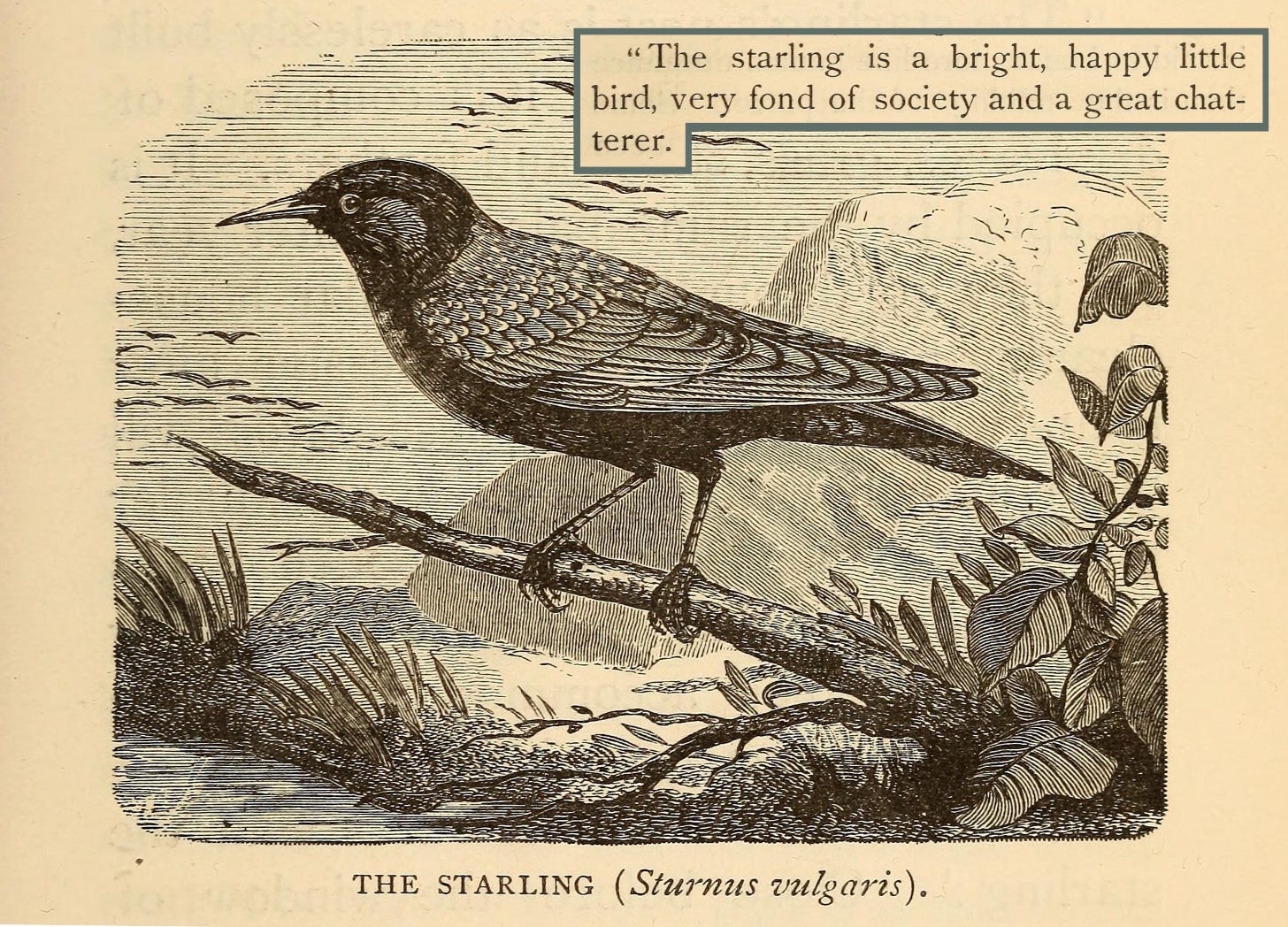
These darker days are for the starlings, juncos, cardinals... and you.

In this month’s issue:
Feeling charitable? A little challenge taps into your outdoorsy-ness for good
This month’s meteor shower is dedicated to all the Geminis out there
If these ferns were good enough for the pioneers, they’re probably OK-enough for you to check out, too
Plus a few other nature notes.

This month’s newsletter comes to you from the snowy, slippery Midwest. For the first time in years, it appears winter has gotten the jump on us here in St. Louis, dumping two rounds of snow before the season has officially started.
Getting outside in winter is difficult. As someone who has become particularly temperature-sensitive due to Long Covid and POTS, thriving outside when the weather turns blustery takes a lot more effort than it used to. But just like I remind all of you once a month, I tell myself it’s worth it, because in reality I know outside can be really amazing.
If I hadn’t recently stepped outside to begrudgingly haul in my Yule decorations from the shed, I would have missed one of those magical nature moments. While dragging storage boxes through the yard, I heard the boisterous chatter of European Starlings. A flock began passing overhead, swirling and speeding by. It was mesmerizing. I stopped for a few moments and watched, expecting the sight to disappear as suddenly as it started… but five minutes later, this mind-bogglingly large flock was still moving through the air. I could no longer see the first bird, and had no idea when the last would trail behind.
Sure, I went out there for a different purpose, but it became a moment of connection with this sleepy world around me. Suddenly, the cold didn’t feel so bad.
My yuletide wish for all you Outdoor Humans is to have one of those astounding nature moments, too. I hope it brings you a little peace as you settle into the quiet of winter.

Creating Your Own Nature Charity Challenge
Purposeful exercise has never been my favorite thing to do… and when winter hits, all that motivation goes entirely out the door. In an effort to still make an effort, I bought an indoor rower a few years back. One day, I’d love to get on the water Ivy League style, but until then, I get up and log my meters in the mornings with the garage door open so I can at least zone out with the woods around me.
This winter, I’m having a hard time staying motivated — 2025 has been one hell of a year and I desperately need some rest. The only thing holding me accountable right now is that I’m signed up for a holiday challenge: every meter I log raises funds for the Northern Forest Center.
That got me to thinking: we’re all capable of incorporating the outdoors into our own seasonal donations. This month, I challenge you to consider creating your own charitable challenge in whatever outdoorsy way intrigues you most.
Here’s how it works:

Select an activity you’d like to do throughout December. Perhaps identifying new backyard birds, getting out on a weekly walk or hike, chopping down invasive honeysuckle bushes in your backyard — anything that’s accessible and interesting to you!
Choose where your donation will go. You’ll feel more motivated to spend time outside and make a solid effort if you feel connected to a cause. In our current economic climate, so many organizations have lost federal funding, so dive deep to find local charities that could use your support. Not sure where to look? Think about the year you’ve had. For example, on the years my children were born, I opted to support Nurses for Newborns, a healthcare service that helps low-income families with new babies and young children at no cost. This year, I plan to funnel dollars to the Cure Mito Foundation because someone I adore has been impacted by a mitochondrial disease. Wherever you choose to donate, consider checking out Charity Navigator. This organization rates how non-profits use funds, and scores them based on transparency, leadership salaries, outreach, and impact.
Tie in a donation. Perhaps you’ll donate $1 for every new winter bird you identify or sign up to volunteer 10 minutes of time for every mile you walk. You may choose to donate one food item to a pantry for every invasive species you remove. Anything you give to support your community counts. (Let’s be honest… the economy is rough out there and every small donation matters.)
Get going! Set aside scheduled time to work on your charity challenge. Many financial donations made this year can be counted on this year’s taxes, so there’s no reason to delay the final portion of your outdoor charity challenge into the new year. As donations of time and physical goods, reach out to the organization you’re supporting and schedule a time to pop by and offer a hand or drop off needed items.
An extra note: in the age of social media, it’s easy to feel pressure to GO BIG on internet challenges. This isn’t that at all, and instead is meant to be more of a small, personal moment of joy that’s connected with a bit of good this year. Let me know in the comments below what your chosen activity is, and what organization you’ll be supporting this holiday season.

🪶 Make a new human or bird friend. Audubon’s Christmas Bird Count began 125 years ago thanks to a group of besties who opted out of hunting. Revisit this interview with Bay Area Birder Paige Pritchard about how birding builds communities and friendships. And consider signing up for Audubon’s annual census, which runs Dec. 14–Jan. 5.
🥾 Bookend New Year’s with a last day and First Day hike. Trails become a bit busier Jan. 1 thanks to First Day Hikes. These events are just what they sound like — a way to honor the calendar change and jumpstart a year spent outdoors. Personally, I enjoy ending the year with a solo hike on Dec. 31, which gives me time to quietly reflect on the year that was. Why not both?
🔭 Look up for a spectacular shooting star show. The Geminids meteor shower runs through the solstice (Dec. 21), displaying its best views on Dec. 12 and 13. This annual shower — which was spotted for the first time in the mid-1800s — puts off minimum 40 to 50 meteors per hour with bursts of up to 120 shooting stars, making it one of the best shows for beginner skywatchers. Head outdoors around 9 p.m. and look towards the Gemini constellation to catch the view.

🐭 You know them as voles, but hear me out: “meadow mice” is much cuter. These small, mouse-like rodents with short tails, tiny ears, and beady little eyes are hard to spot in the deep of winter but they are around, surviving the frost in possibly the most adorable way. Underground in their elaborate nests, “meadow mice” stay warm by shacking up in groups and snuggling together. Unlike other rodents, voles do not stash food but instead go on a diet, losing up to 20% of their body mass during the winter months, and heading out in rotation to forage food from above ground. You’ll rarely see them — these critters are sly, and you would be, too, if you were a top dinner pick for owls, coyotes, and even squirrels.
🌿 Christmas ferns (Polystichum acrostichoides) are holding onto their pickle-colored fronds this time of year, making them easy to spot along moist and shady hillsides. These native ferns are most commonly found in the eastern half of the U.S., and in spring produce fiddleheads that slowly unfurl into fronds up to 30 inches long. Christmas ferns lose some of their oomph in winter, flatting out along the ground. According to lore, the name is an ode to this plant’s bristly, sawtooth leaves, which were supposedly once used by pioneers to create holiday wreaths.
🧠 Black-capped Chickadees have gone through some growth, y’all. The chicka-dee-dee-dee of these small, 6” birds is more clearly heard in the quiet winter months. While these backyard feeder birds are permanent residents of the U.S. and Canada, they’re not the same birds they were during the warm season. Throughout autumn, chickadees experience a massive 30% growth in their hippocampus — the brain area responsible for memory — which helps them remember where they stashed thousands of foraged seeds. When this mental grocery list runs out in spring, a chickadee’s brain mass shrinks back, essentially wiping the slate clean.

Another Plug for the Outdoor Humans Nature Journal

Last call! Well, sort of — the crate of official Outdoor Humans Nature Journals has finally arrived from the publisher and pre-orders will begin shipping out today! A heartfelt THANK YOU to every single one of you early birds who purchased a copy, whether it was for yourself or the person with whom you want to spend this next year outdoors. These journals are up for grabs through January, so time is almost up if you’re looking for an inspired year outdoors.
In case you missed last month’s overview of these journals, here’s what you’ll find inside:
A monthly calendar with nature-focused holidays and happenings, plus space to record your own daily observations
Season-specific nature notes that encourage you to observe wildlife, get up close with plants and trees, and find tasty foraging treats
Monthly ideas for connecting with the natural world — including indoor activities for those dark and frosty winter days
Journaling spots to recount walks and hikes, critter encounters, and other curiosities witnessed during your outdoor explorations
A simple time tracker that helps you visualize just how much time you’re really spending out there
The Outdoor Humans Nature Journal is meant to help you develop the habit of stepping away from screens and stress, even if just for a few moments each day, starting in January.
Unlike many newsletters, Outdoor Humans is paywall-free! If you enjoy reading this monthly newsletter, consider supporting the real-life human behind Outdoor Humans by ordering your copy of the 2026 Nature Journal. Each newsletter is written entirely by me, Nicole Garner Meeker, an actual human who lives in the actual woods, and wants you to actually go outside.
That’s it for this month’s edition of Outdoor Humans. Keep your wits about you, and go the heck outside.
Nicole Garner Meeker



This month’s featured image comes from the 1883 Birds and their ways by Ella Rodman Church. Within its 400+ pages, Church used three fictional, “motherless children” of Elmridge country home and their governess to teach readers about 30 bird species, including English Robins, nightingales, penguins, and geese.
Hi! I tried to use your "share" button, but it led me to subscribe. I love sharing your newsletter on social media!
Beautifully written and a great challenge for Yule. Thank you!