

Finding Friends Where the Wild Fowl Fly
Bay Area birder Paige Pritchard explains how bird watching can help you make friends (particularly those without feathers)

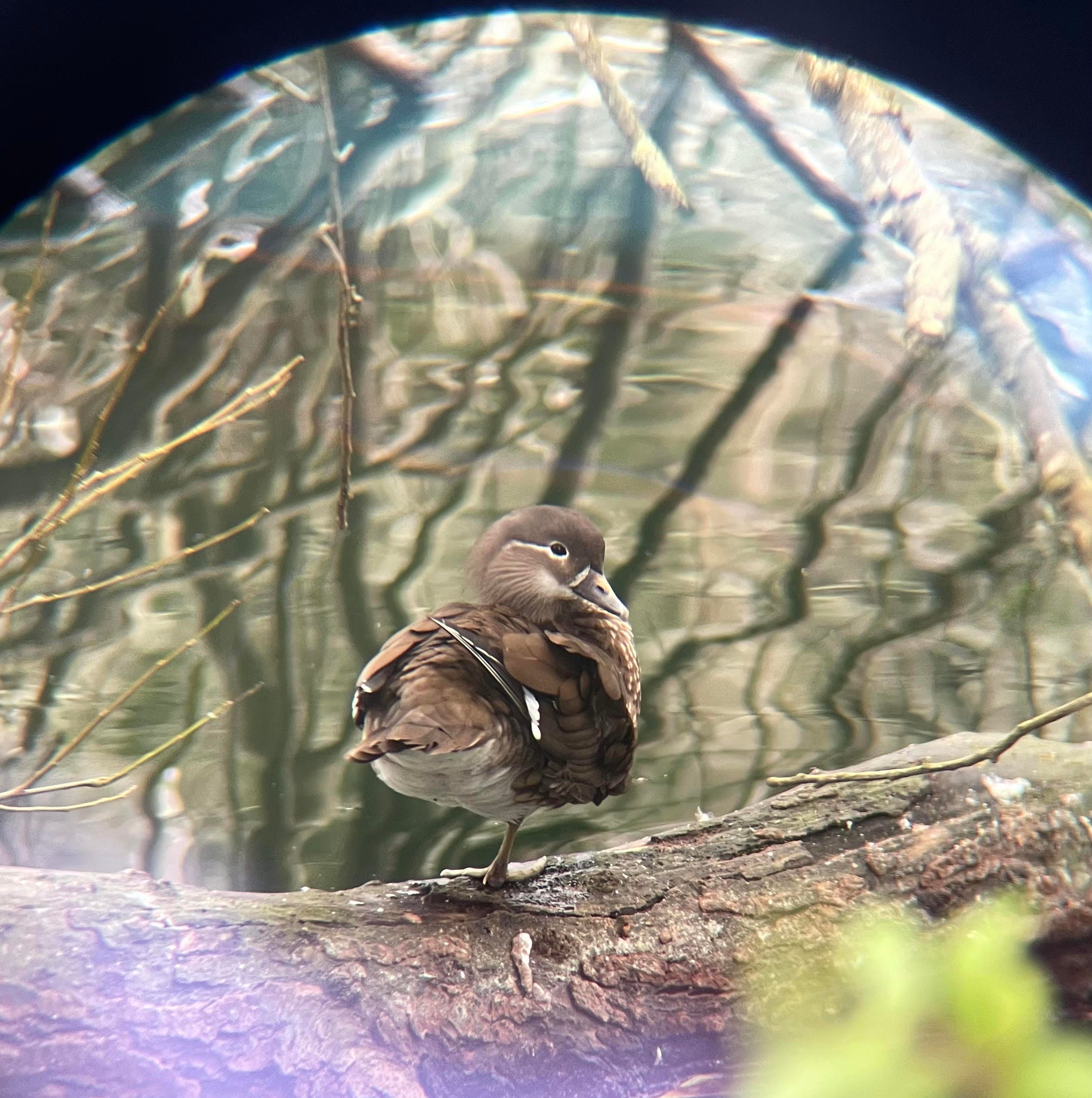
On Christmas Day 1900, ornithologist Frank M. Chapman convinced 27 fellow birders to try something new: counting birds instead of shooting them. December 25 was often reserved for “side hunts” during the 1800s, a game that involved venturing into nature in teams with the goal of shooting as many birds and mammals as could be flushed out into the open. But at the start of a new century — the same one that would soon see passenger pigeons and Carolina parakeets entirely disappear — Chapman hoped to usher in a new holiday tradition, one that would potentially protect flocks across North America, or at least collect data about their well-being.
That holiday, Chapman and his crew of counters led the first Christmas Bird Census, documenting nearly 90 species of birds stretching from the California coast to Toronto. Their efforts would become the progenitor of an annual event still hosted by the Audubon Society today.
More than 120 years later, birders across North America gather in mid-December and January, banding together in designated areas to watch for avian activity. Now known as the Christmas Bird Count, Chapman’s inspired idea has grown into an incredibly useful tool for assessing bird populations year after year. When paired with other field surveys, these counts alert ornithologists and naturalists to waxing and waning bird populations. Unlike other Audubon surveys, the Christmas Bird Count requires heading out to specifically selected sites — you may or may not have one nearby, and slots are limited to a number of participants, making the census somewhat inaccessible.
If the idea of meeting up with friends this time of year to not murder birds intrigues you, but participating in the Christmas Bird Count isn’t possible, you’re in luck. Birding groups across the country do just that, all year long. According to Paige Pritchard, co-lead of Queer Birders Bay Area, bird watching is a fantastic way to meet new people wherever you call home. The group, which she organizes with fellow birder Alyssa Winn, gathers monthly at different spots around California’s San Francisco Bay.
“It’s just so fun meeting the folks who show up,” Paige says. “It’s birding, but the priorities are to be in community outside. To learn from each other.”


Paige grew up in southeast Missouri where common backyard birds such as blue jays, cardinals, and robins (a favorite) inspired an adult interest in birding. “There was a certain level of birding I was always doing, but I didn’t know it,” she says. One of the earliest bird-watching partners was her grandmother, Ruth, who would point out birds at backyard feeders, naming off species and alerting Paige to the calls. “I always enjoyed seeing her know the names of things,” Paige recalls.
A cross-country move to California pushed Paige into birding as an adult because it offered a way to explore the area. “There’s a whole new flora and fauna here,” she says, mentioning an affection for the coastal birds that swoop over the bay. “The brown pelicans just blew my mind. To this day, they’re some of my favorites. They’re like dinosaurs — just these massive, beautiful, dramatic birds that fly over and look like pterodactyls.”
In early 2022, Paige met fellow birder Alyssa Winn through an organized bird walk, and by the end of the year the duo launched Queer Birders Bay Area’s (QBBA) first group meetup. (Paige points to Alyssa, who has birded regularly for the past five years, as the driving force behind the group’s creation.) Sharing their monthly planned outings through Instagram and Meetup has helped QBBA grow, bringing together a diverse crowd of birding enthusiasts.
“There’s a lot of importance in being outside together, and visibility in community,” Paige says, pointing to the historical sidelining of LGBTQ+ folks from many activities and spaces. “We want to create intergenerational friendships and connections. Queer Birders has been so great for that. We’ve had people bring their teenagers. We’ve had people across multiple generations who have been birding in the Bay Area for decades, and are just a wonderful wealth of knowledge. We have people who are studying ornithology and can just rattle things off.”
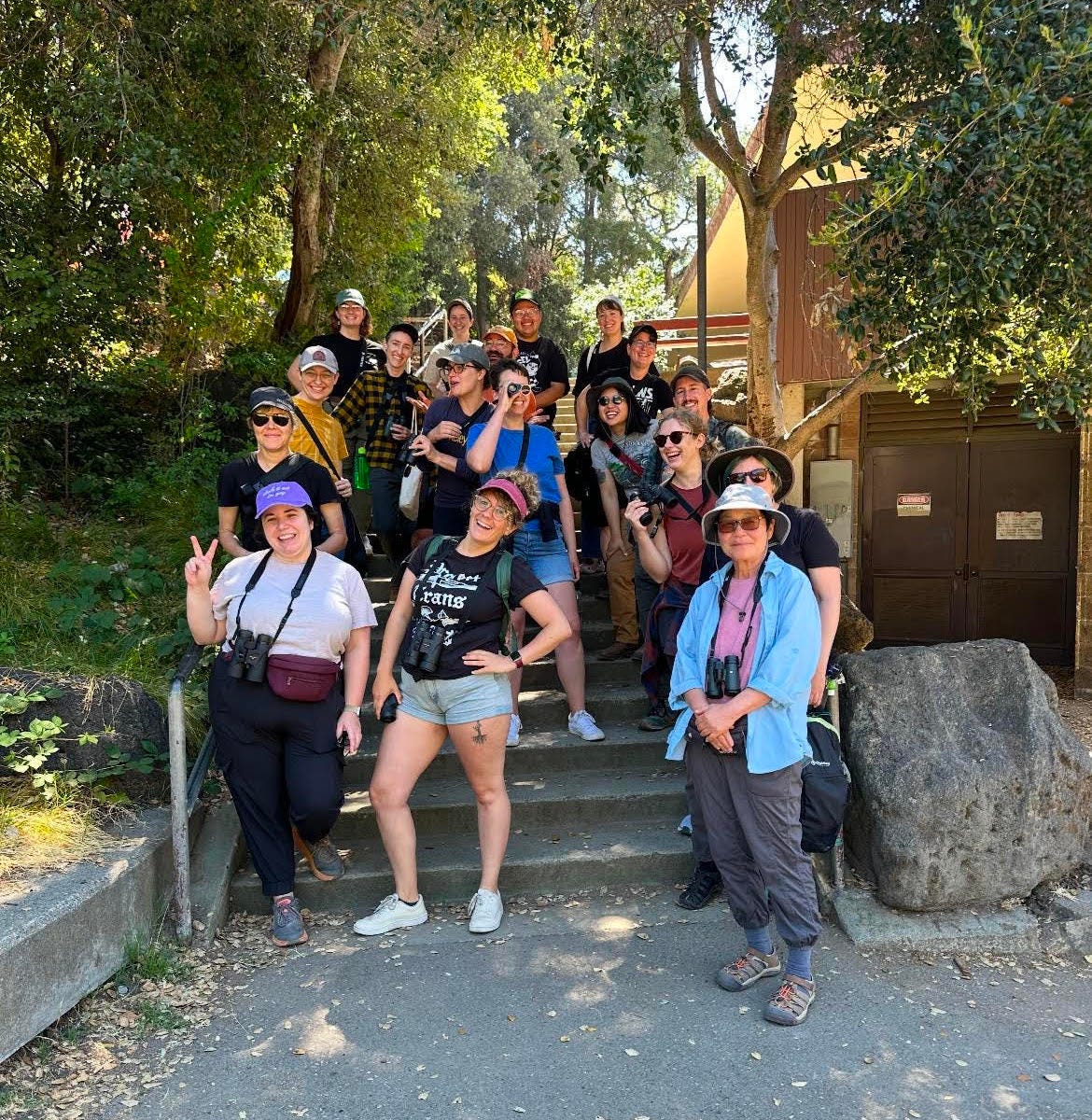
QBBA welcomes birders of all levels and abilities — one of the group’s core tenets is learning from one another. Meetups are often organized around public transportation and with physical access in mind. There’s also a focus on “cross-pollinating” with other outdoor groups to expand recreational opportunities. In 2023, QBBA collaborated with Fat People Hiking Bay Area, a group that encourages outdoor exploration for all bodies regardless of weight, and is looking for more groups to collaborate with in the future.
“It’s so hard these days to make friends,” Paige says. “There’s that bridge you have to cross with ‘What’s your number?’ or ‘What’s your Instagram?’” That’s one reason why QBBA also runs a Discord group connecting California birders, helping them move from online chats to real-life outdoor plans.
“It’s really been one of the most rewarding things,” Paige says about using QBBA to build friendships and bolster a sense of community in the Bay Area. The birds are fantastic, too.

Start squawking (aka put out a call to collaborate). You don’t have to join a birding-specific group to spend time looking at fowl, though collaboration between groups you’re already in can develop fledgling interests and friendships. “I love this as an avenue for connections to be made, and for people to plug into new spaces,” Paige says. Queer Birders Bay Area is always looking for new outdoor groups to work with, and interested organizations are encouraged to reach out.
Don’t feel that you need to be an expert. Knowledge can be a stumbling block to getting started with bird watching, though this hobby doesn’t require you to memorize every bird in your region. “If you go outside and look at a bird, you are bird watching,” Paige says. At the same time, give lesser experienced birders in your group a chance to learn by using one of QBBA’s rules: pause before calling out a bird ID so that everyone has a chance to observe and identify.
Have patience, young padawan. One of the hardest parts of bird watching is waiting for the birds to appear. Being able to sit still and observe your surroundings gives you the chance to see birds you may have missed. “It’s a hard skill to foster, so focus on that,” Paige says.
Let technology give you a helping hand. Paige recommends Merlin Bird ID — what she calls “Shazam for birds.” Another great app, eBird, can help you find birding hotspots.
Don’t stress about splurging on gear. Getting started doesn’t require more than your eyes and ears. While binoculars, books, and other items are often promoted to birders, Paige advises that you don’t need them to get started. However, many libraries and birding groups offer gear kits you can check out before your next adventure, so be sure to look for those free resources before filling your shopping cart.
You don’t have to be an ornithologist like Frank M. Chapman to enjoy our feathered friends this holiday season, but you can take a page from his book by simply gathering with friends and watching birds. You might just walk away with something deeper than an afternoon in the outdoors.