

How to Befriend Sweater-Wearing Worms
These caterpillars can help you become a weather-predicting crone

The National Weather Service (NWS) has been around longer than you may realize, dating back to February 1870. At the time, President Ulysses S. Grant signed into law the first iterations of the department modern forecasters rely on, with the aim of collecting weather data from military stations and other spots around the country. Fast-forward to 2025, when political mischief has crumbled much of the government department that alerts us to dangerous conditions and sunny days alike.
Without this information, how are we to know how much wool to card for the impending winter or how many hard squash to pack into the larder? Perhaps we shall look to the worms.
Americans have been observing woolly worms since the colonial era, using them as weather prediction tools. Is this legit by modern standards? Probably not, yet we currently exist in a nonsensical society, so get with the vibe. Not to mention, woolly worms are fascinating insects in their own right.
Worms? Ye Must Be Mistaken
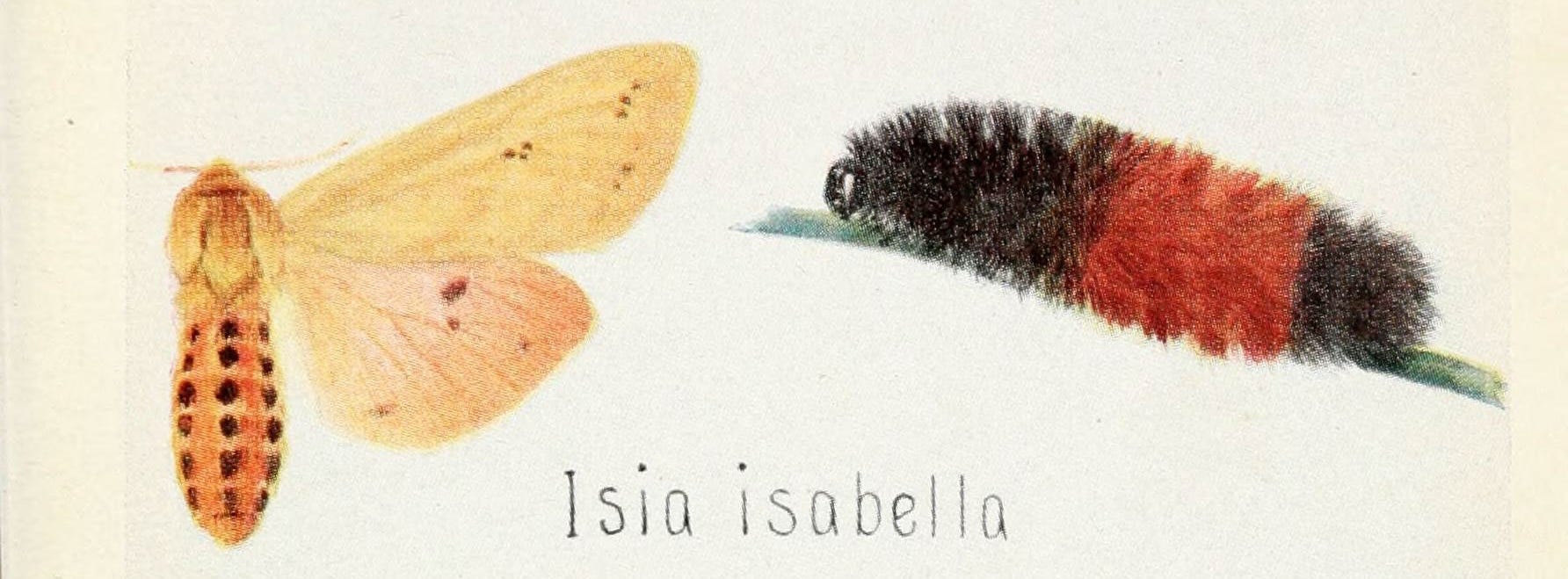
Whether your waggling tongue calls them woolly worms or bears, I have to break it to you: these fuzzy critters are neither. They’re caterpillars, a juvenile form of the Isabella tiger moth (Pyrrharctia isabella).
While typically seen in autumn, woolly worms are active most months of the year. In spring to early summer, woolly worm eggs hatch and transform into caterpillars, feasting on all the greenery they can find before building their cocoons and transitioning into moths. That first generation lays eggs in late summer and early autumn, which quickly grow into the caterpillars we humans see wiggling about in cooler weather.
The second group of woolly worms gets the unfortunate responsibility of surviving through winter’s harshness so they can lay spring’s eggs. And these little critters are amazingly equipped to do so. Surely, the sweater-like hairs keep them warm from December through April, right? Not really. Woolly worms produce a substance called glycerol, a natural version of antifreeze. This chemical allows them to safely hibernate under rocks or tree bark, weathering temps as low as -90° Fahrenheit. Their faux fur, called setae, helps the caterpillars freeze slowly so they can withstand the temperature drop and reduces damage from thawing and refreezing as temperatures swing up and down throughout the season.
Move Over, Punxsutawney Phil
How woolly worms became the prognosticators of winter weather isn’t clear, though the myth got something of a second life in the late 1940s. Dr. Howard Curran, then curator of entomology for the American Museum of Natural History, ran a tiny study in 1948 featuring a mere 15 woolly worms. His wintertime predictions picked up press coverage, and for about a decade after, Curran’s annual autumnal trek up a New York mountain to observe woolly worms was a popular newspaper feature.
Today’s scientists point out those limited sample sizes weren’t large enough to prove (or disprove) the caterpillar myth. Like all things in nature, woolly worms and their patterns have incredible variability — no two caterpillars are alike, even in the same season. Not to mention that not every fuzzy-looking caterpillar is an Isabella tiger moth — some similar species are entirely black, yellow, or white, which can skew the results. Getting an idea of whether or not these critters can really predict weather would mean collecting hundreds to thousands for observation each season, which sounds cute but also tedious.
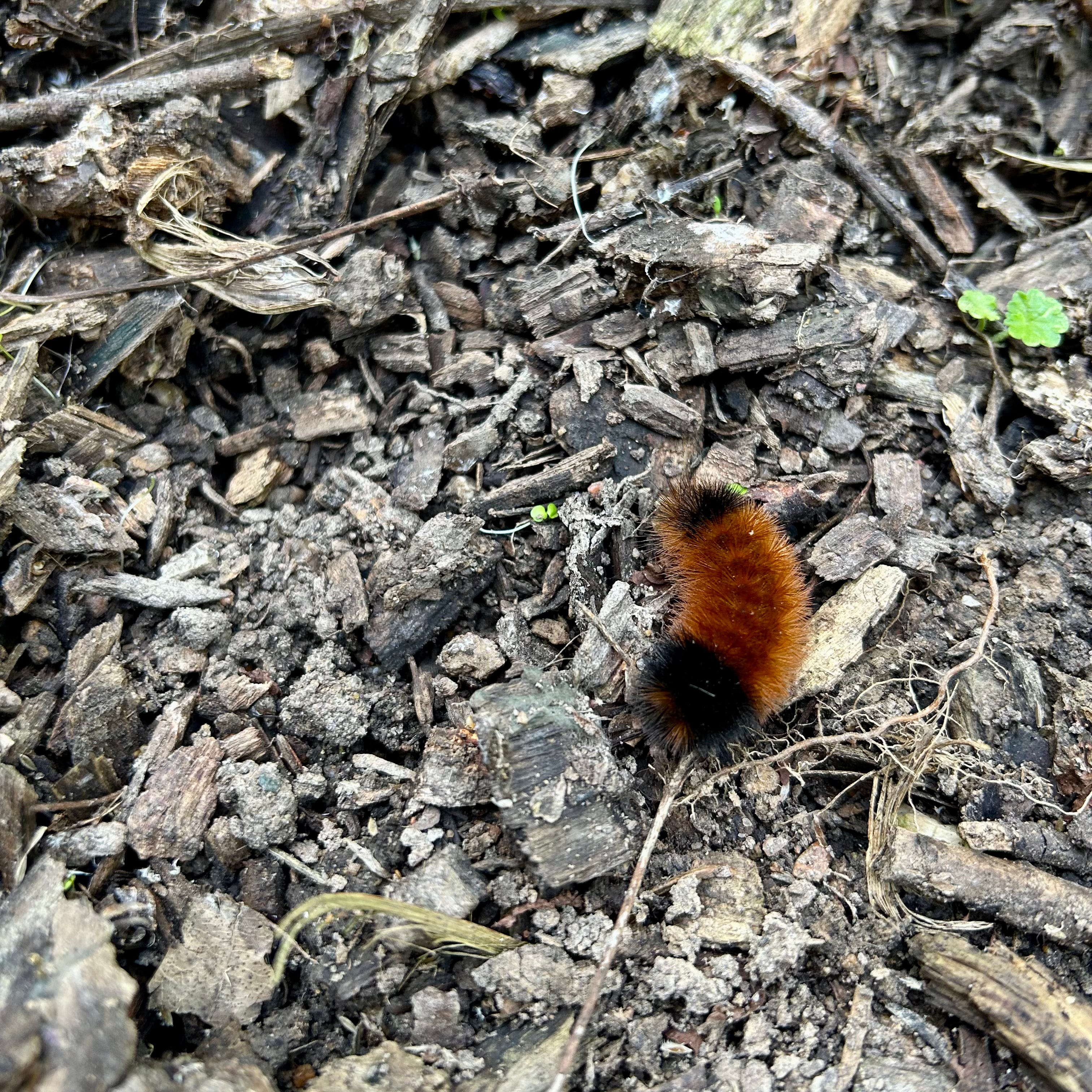
Still, I think there’s something good-natured and fun about asking woolly worms their thoughts on the incoming cold season — we do the same each spring with a giant rodent, after all. Here’s how you can interpret the little fuzzy caterpillars you find in your habitat:
Look at the colors
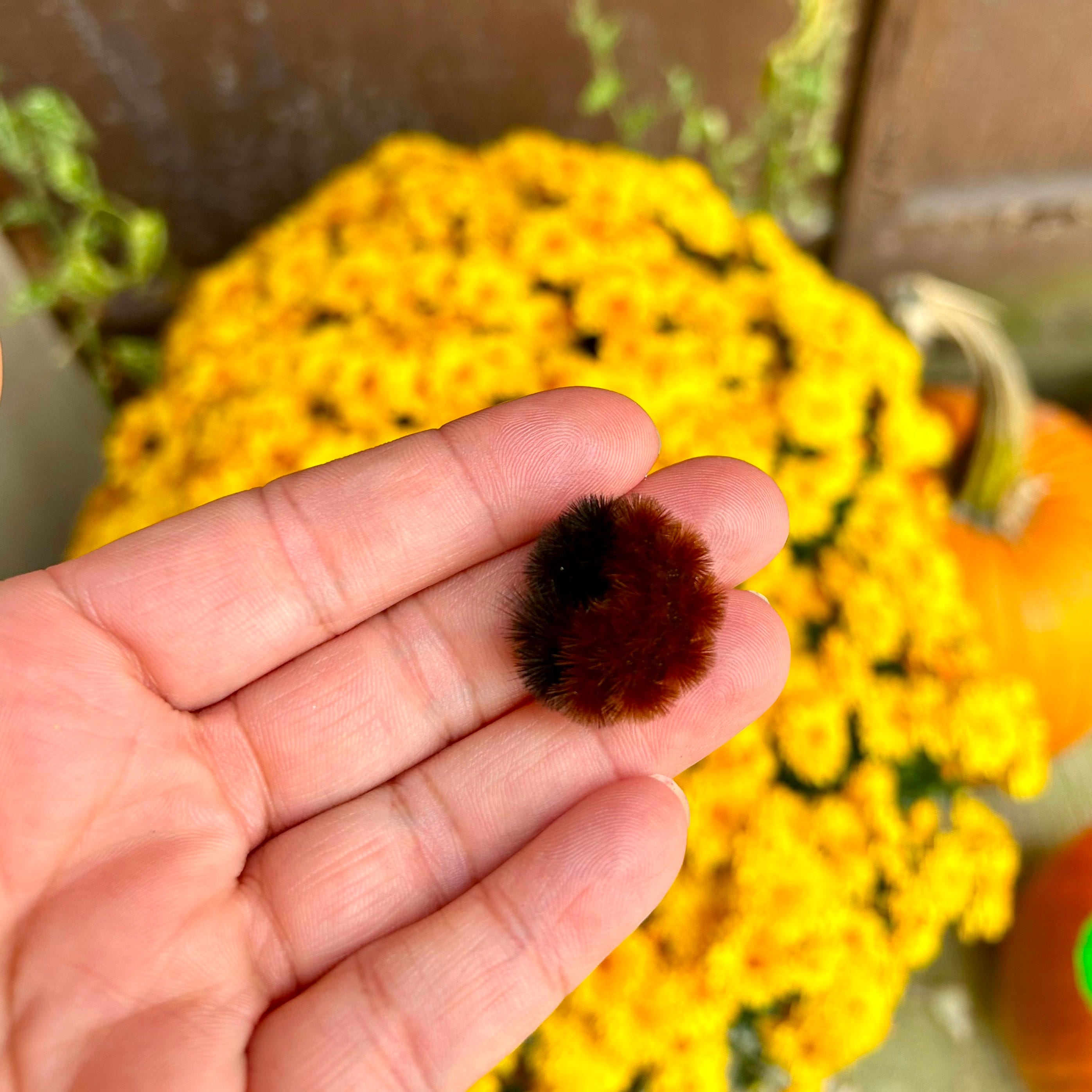
Isabella tiger moths will have black and rust-brown bands of setae. Black supposedly indicates severe weather, while brown represents mild conditions ahead.
Observe the placement
Isabella tiger moth caterpillars have 13 body segments, which humans have interpreted as being one for each week of winter. A thicker brown stripe suggests more weeks of calm weather, while caterpillars with more black segments predict a harsher winter ahead. If you really want to go all in, you can use a magnifying glass to get a close look at each body segment to make your weather predictions.
Return your new friend to a safe spot
Woolly worms are lovely to interact with (they don’t bite or sting) but like all living creatures deserve kindness and respect. Be sure to return any you capture to a safe place near a tree or rock where they might burrow and rest for winter. Come spring — should you make it through a dark winter without contracting scurvy or typhus — you may just see them again, albeit in fluttery yellow suits.