

May 2026: Into the Garden We Go
Finding food in the woods? Fantastic. Finding food in your yard? *Chef's kiss.*

In this month’s issue:
Garden stores are out to get your dollars right now. In this economy?
We 👏🏽 are 👏🏽 not 👏🏽 doing 👏🏽 that. Here’s how to grow budget veggies.Some molds have a mind of their own… so, put some respect on their (misleading) names.
If the enemy of a mosquito is your friend, get ready for an introduction.
Plus a few other nature notes.

May is a wild month, which is why this issue is running a bit behind. We’re on the verge of a whole new season, with a laundry list 10 miles long of tackle before summer’s actual arrival. Simultaneously, the opportunities for outdoor recreation are suddenly limitless… so long as you can schedule them around the graduations, birthday parties, bottomless brunches, and other celebrations. (I know I’m forgetting something.) We’re all just trying to make it through to June.
I hope this month you’ll be able to squeeze in at least a few minutes of outdoorsy wonder when possible. Currently, my favorite end to a busy day: a 30-minute evening walk, listening to the sound of spring peepers popping off while catching a little golden hour magic in a world that has sprung back to life. May is such a joy; it’s a true shame we can’t bottle it up and save it for when life calms down.

8 Tricks for a Big Summer Garden on a Tiny Budget
“Recession core” is trending on social media, and the algorithm appears to be churning out more gardening content than normal. Am I concerned? Considering the Great Recession of 2008 happened before I had true adult responsibilities, and this time around I’ve got a lot of them… It’s not feeling great. However, there’s one thing that I’ve managed to get pretty good at since graduating high school: gardening. (Especially with a recession pop playlist.)
Vegetable gardening can paradoxically be expensive. The joke of “spending $200+ on garden materials and plants to ‘save’ $1 on peppers” is a reality for many first-time gardeners (and some experienced ones, too). But some of the more scrappy connoisseurs of the agricultural arts see vegetable gardening as a challenge: supplement your garden all summer long without spending the equivalent of an Aldi trip. With the cost of a cart as of late, I thought I’d share a few budget-friendly tips for tending your backyard crops.
1. Focus on what YOU can grow. You don’t have to do it all, even though the siren song of seed catalogs and garden nurseries will persuade you otherwise. If you’ve never planted your own vegetables, now is the time to ease in with lower expectations. Pick a small assortment of plant varieties that make an impact: green beans, squash and zucchini, tomatoes, and heat-tolerant greens such as kale or mizuna. They’re all easy growers with decently long harvests (some into the early winter months).
2. Inventory your space and supplies. Making a plan before you walk into a nursery or inventorying your existing box of seeds before adding new ones to cart stops you from overspending. Planning out your garden space helps you know how many plants you need and where they’ll go before the garden store euphoria kicks in.
3. Don’t buy the “easy” plants. Starting your own veggie plants can be intimidating, but it’s a skill worth learning. You don’t have to grow everything from scratch, but some crops are truly easier (and cheaper) that way. Beans, corn, lettuce, cucumbers, squash, okra, and melons can be planted directly into the ground in May once soil temps have warmed. They sprout and grow quickly, are typically hardy, and are great for beginners. Instead of paying $3-6 for one plant, a pack of seeds at the same price point may grow you dozens more.
4. Make gardening a community sport. My mom, great auntie, and I have an unspoken plant pact: each year one of us will have a garden struggle, and the other two offer up extra plants or seeds to save the day. The past few years have been plagued with groundhog attacks, too-hot cold frames that fry delicate seedlings, destructive downy mildew, and more. But with a “we all succeed together” mindset, these garden-enders transform into speed bumps. Gardening within a community can help reduce your cost and increase the odds of a tasty summertime lunch.
5. Look for freebies. Garden season transforms me into a human raccoon, foraging for all the low-to-no cost items I can find. Free mulch? My city offers it at no cost, made from downed limbs throughout the year. Free plant pots and lumber that can be turned into raised beds pop up on buy-nothing groups and online marketplaces (and are even spotted at the curb on trash day). I even look for extra plants in nursery containers; it’s not unusual to find a six-pack of tomato plants with a few extra plant friends inside.
6. Brew up homemade fertilizers. There’s a lot of concern for large-scale agriculture’s diminished access to fertilizer this summer due to the Strait of Hormuz closure. Great news: you can make your own fertilizers when the garden stores run out. My personal favorite is using banana peels — after my tiny humans destroy a bunch of bananas, I drop all the peels in a coffee can or lidded bucket filled with water, and let it steep outdoors for about a week. This smell-free, waste-free hack creates an extra calcium and potassium boost for my tomatoes and peppers, which keeps away diseases such as blossom end rot.
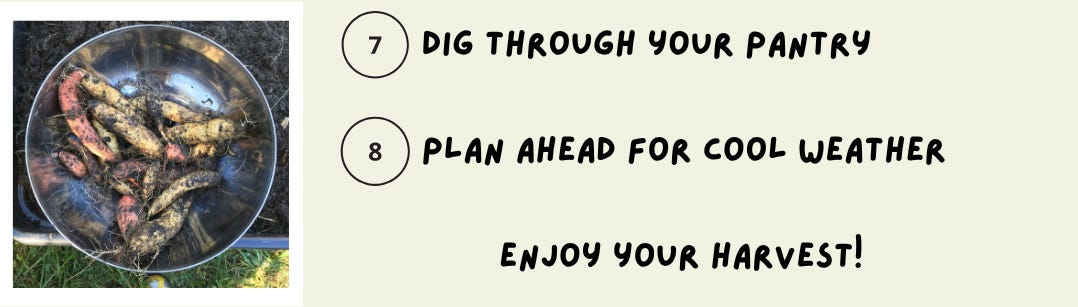
7. Dig through your pantry. I love growing sweet potatoes, but I do not like buying my plants — the slips are often overpriced and just don’t do well in shipping. I start my own instead, often with grocery store sweet potatoes that went rogue in the pantry. Those growths are the start of new cost-free plants that grow fantastically in five-gallon buckets.
8. Plan ahead for cool weather. Summer gardening is wonderful because it’s when all the good stuff grows. It can simultaneously be a relentless season. You’re fighting critters and pests, heat waves, and weeds that grow a foot a day. If summer isn’t going your way, know that you have another chance in autumn. Most cool-weather varieties make their garden debut in August and September, growing through to frost. Fall gardening is more relaxed and can have just as bountiful harvests of kale, kohlrabi, broccoli, lettuce, carrots, and other crops that are just as helpful in padding your grocery budget.
Have gardening questions or your own cost-saving hacks? Drop them in the comments! Planting future food is quite possibly my favorite thing to chat about.

🌼 Pick and press a wildflower. The frenzy of roadside blooms is just beginning. Find and ID your favorite, and pick just one bud to press in the pages of a beloved book.
🪴 Make friends with the enemy of your summertime enemy. Carnivorous plants have a rep as exotic species, though several are native to North America. Venus Flytraps and pitcher plants thrive outdoors in warm temps; add one to your evening sitting spot to combat mosquitoes and other flying pests until autumn’s frost rolls around.
🐝 Watch (or rather, listen) for wandering bees. Crowded bee colonies often split before summer arrives, in search of a new home. Keep your ears open for the hum of these temporary swarms as they find new real estate. And check out the new Secrets of the Bees documentary (currently streaming free on National Geographic), which uses macrophotography for amazing closeups of bees at work.

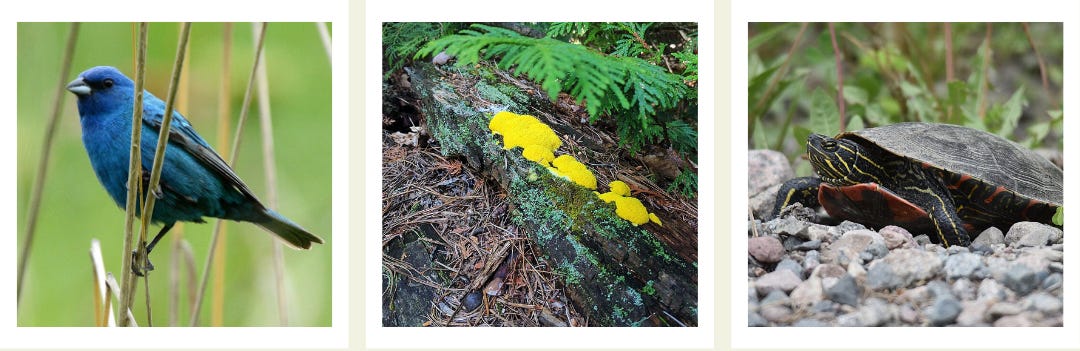
🐦 Woohoo, these blue-hued birds are back for summer. Indigo buntings have made the return voyage from Central and South America, literally appearing overnight thanks to their miraculous star navigation. Listen for their upbeat and repetitive “look look, where where, see see!” calls, which are often embellished with additional, region-specific quips. I find it fascinating that male indigo buntings skip out on learning their dad’s bird calls, and instead pick up their tunes from the community they choose to call home. This creates a longstanding “song neighborhood,” where the same birdsong can be heard for decades.
🦠 It’s oozy, woozy, and possibly in your yard. May brings warm, humid weather for those of us in the U.S. Which is exactly what you need to get a good slime mold going. The name is a bit misleading; while slime molds were once thought to be fungi, they’re actually single-celled organisms that can solve mazes and communicate through chemical signals. You can find them on rotting mulch or stumps where these myxomycetes dine on the bacteria that eats decomposing plants. Now that you know this, it’s a little weird to google “how to kill slime mold in my yard,” right?
🐢 Turtles are on the move. World Turtle Day arrives May 23, timed perfectly for turtle nesting season in North America. Be kind and watch for these slowpoke testudines on roadways as they search for mates and cozy spots to lay their eggs. Our part of the globe is home to more than 64 turtle species, the most widespread being the painted turtle (Chrysemys picta), which lays up to 50 leathery eggs each spring. ID this species by looking for a smooth, olive-black shell; yellow stripes along the face and neck, and five clawed toes on each foot.

Outdoor Humans Asks: How Are You Recreating on the Cheap This Summer?
Gas prices are over $4, groceries are frustratingly expensive, and every little thing seems to cost double what it should. Summer’s supposed to be fun. So, Outdoor Humans is asking: what’s your plan for having an amazing summer despite (or in spite of) a strapped budget?
Perhaps you’re scouring for free activities at parks, inviting friends to your fire pit in place of the bar, or doing the damn “I booked this backpacking trip six months ago” adventure anyway. Let Outdoor Humans know in the comments — your idea may be featured as #inspo in the upcoming June summer solstice issue.
That’s it for this month’s edition of Outdoor Humans. Get out there and plant with wild enthusiasm, my friends.
Nicole Garner Meeker



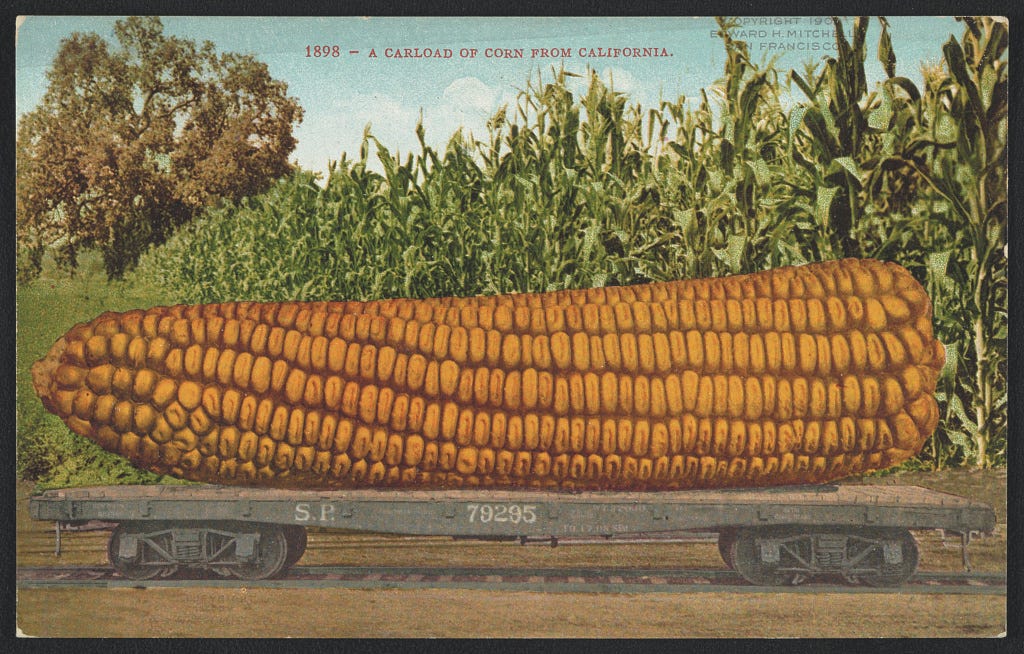
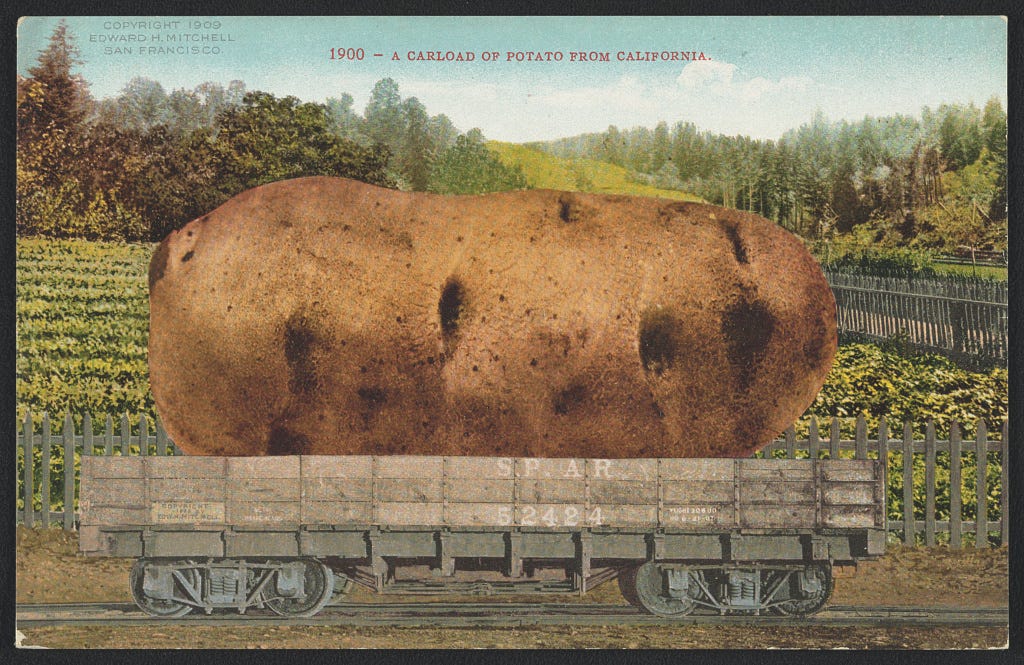
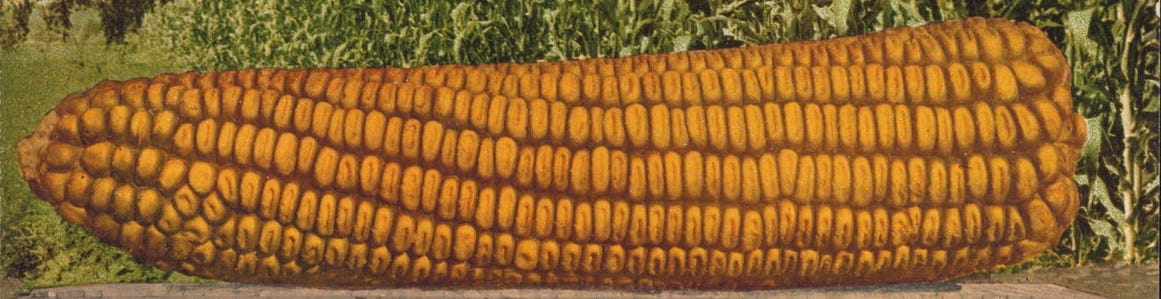
This month’s feature art includes “A Carload of Corn from California” and “A Carload of Potatoes from California,” two postcard prints created in 1909. Postcards boomed in popularity in the early 1900s when mail service became speedy and affordable. Simultaneously, gag postcards with exaggerated jumbo prints became popular, like these featuring supersize produce. There’s more within the Library of Congress archive, including giant strawberries, oranges, and walnuts.
Images shared in the nature notes sections are public domain works created by the U.S. Fish and Wildlife Service. You can find the originals here: indigo bunting, slime mold, painted turtle.
All other images are created by me, including photos from my real life garden.
.jpg)
.jpg)