

Watercolor Wilds: How to Spend Spring's Rainy Days Inspired
Artist Abigail Richardson challenges you to be like water and go with the flow

We exist in a tumultuous timeline for art. On one hand, the internet has made sharing and learning about art more accessible than ever — I’ve discovered so many inspiring artists simply because an algorithm pushed them into my Instagram feed. But then there’s the feeding of and fighting against AI, a force that is glaringly devoid of human emotion as it “creates.”
What does this have to do with spending time outdoors? Art just so happens to be an incredible medium for quietly connecting with nature, if only we take the opportunity to sit down and create it ourselves. And more importantly, be OK with letting go of perfection. In 2025, spent a rainy April morning with artist Abigail Richardson, an abstract watercolor painter who recommends doing just that.
While we originally planned a little en plein air painting, a relentless downpour trapped us inside. Luckily, we got a hefty dose of inspiration from the dense, velvety greens and battered yellow wildflower blooms right outside my dining room window. It was the perfect backdrop for a crash course in watercolor painting.
“Painting is rest. You have to sit still. You have to be in the moment,” Abigail told me, and she was right. Trying to record the moody, rainy view couldn’t be done with an AI prompt or even with my phone. It required intricately observing the scene for longer than 10 seconds to take in the vivid colors Mother Nature had already swirled together before gliding my paintbrush to copy the scene.


“You’re supposed to move with the water,” she said. “Be OK with letting it flow.”
Flowing from inspiration to actual art was harder than I’d realized, but mostly because like many dabbling artists, I couldn’t get out of my own way. Abigail advised me to do as our environment does, focusing less on producing a flawless rendering and more on the joyful process of doing. While she assured me I could get as technical as I wanted, the goal was to focus less on copying verbatim what I saw and more on following nature’s lead.
“Let go of control. That’s what our daily lives are like, and we’re trying to emulate organic inspiration. Every leaf you look at in nature is different,” she pointed out, reminding me that my work-in-progress wasn’t a photograph, but rather an interpretation of how I felt about that moment.


Many of Abigail’s pieces present a connection to the outside world. Fish, flowers, leaves, and other elements make their way into her abstract pieces where they communicate her very human emotions and feelings. They’re not always the primary focus, and they don’t have to be — while she doesn’t typically paint landscapes, natural symbols are a hallmark of her work.
“Nature just grows. It knows what to do, and sometimes when I don’t know what to do, I look for symbols in nature that inspire my art,” she told me. For her, nature’s resilience is a reminder to keep creating, rain or shine.
Abigail’s 3 Tips for Embarking on Your Own Watercolor Adventure
Start simple. Unlike other paint mediums, watercolor is relatively accessible to beginning painters. A paint palette can cost as little as $5, and beyond paintbrushes and watercolor paper, there’s not much else you need. Watercolor pencils are another inexpensive option that lets you sketch from anywhere (like a park bench) and add water when it’s more convenient.
Let nature’s palette lead the way. “Capture the colors you see first,” Abigail says. “Make sure the colors touch and see what they’re doing. You’ll get more comfortable.” If that still feels intimidating, start your watercolor exploration with red, blue, and yellow, or shades of just one hue.
Avoid the perfection trap. “The goal isn’t to paint something perfectly. Try to capture the inspiration of what you’re seeing out there.” With more practice, you can shift into sketching, and then, as Abigail says, you’ll be “wilding out.”
You can find Abigail Richardson and discover more of her art on Instagram.
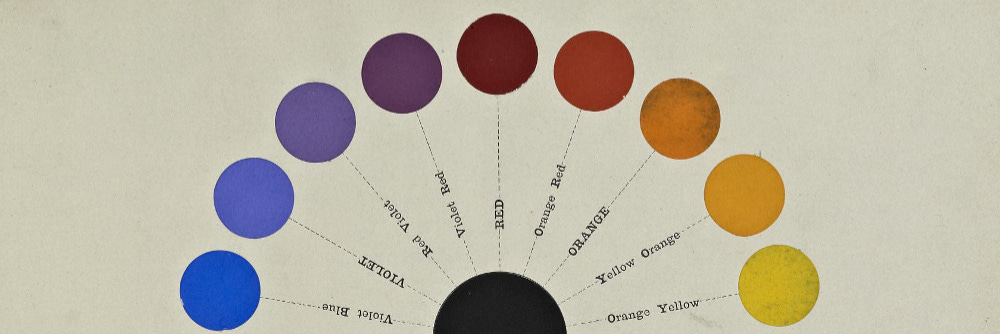
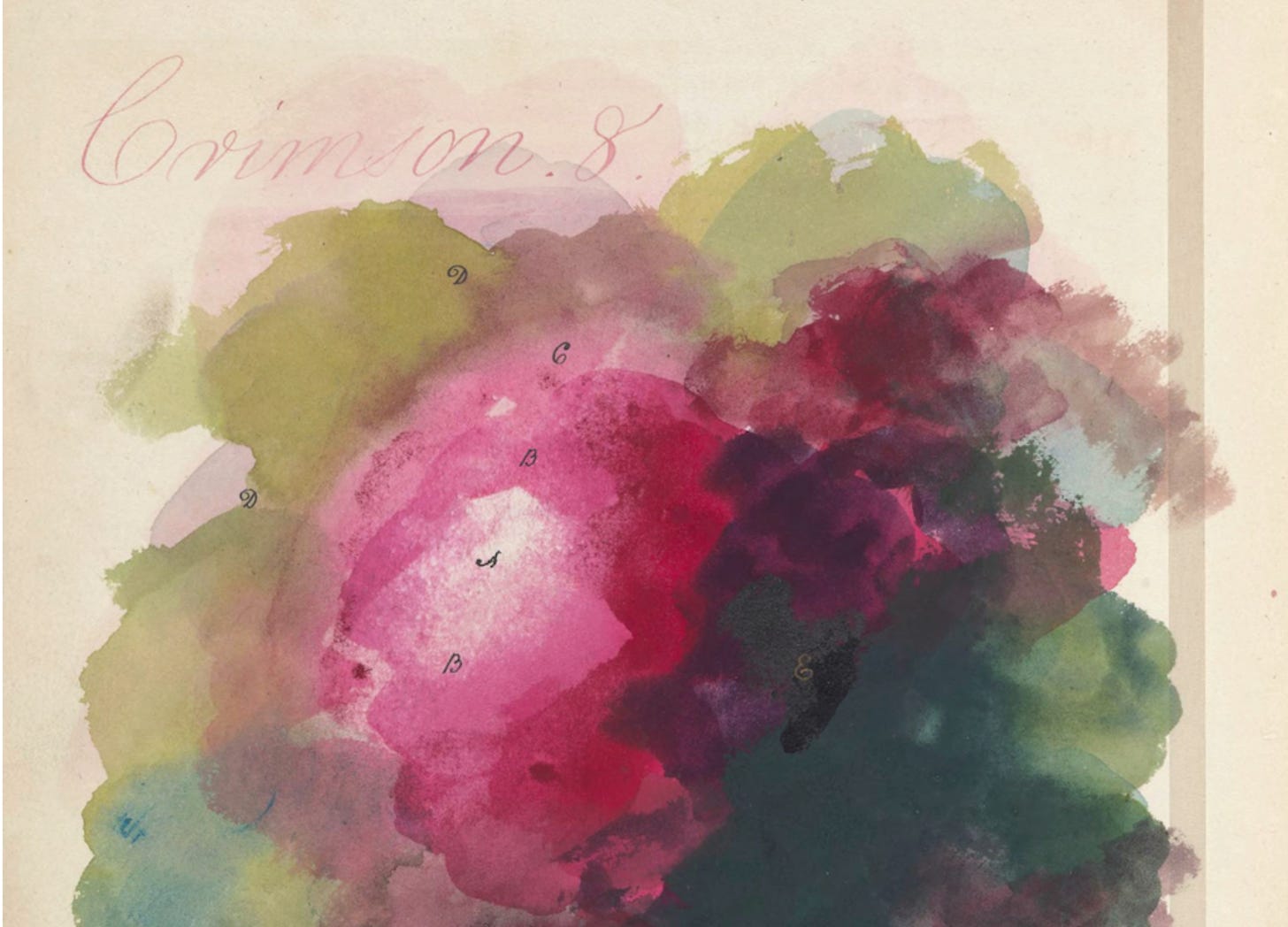
Art notes: This article’s feature art comes from New Theory of Colours (1808) by Mary Gartside and A Class-Book of Color (1895) by Mark Maycock.