

Weeds, Weeds, Weeds: ID These Scraggly Leaves in Your Backyard
A fresh look at a few so-called "annoyances"


Weeds are a human construct, and you cannot convince me otherwise. In the natural world, every species serves some kind of purpose, though it’s we humans who have taken it upon ourselves to decide if that task is useful to us. You may have heard the famed Ralph Waldo Emerson quote alluding to the same idea:
“What is a weed? A plant whose virtues have not yet been discovered.” 🌼
We silly humans, always centering ourselves as the discoverers, owners, and managers of all things. Even with that self-awareness, I still wonder: What the heck is this plant? Does it do anything? Can I use it for something? (Also: Why is it taking over my entire garden?) Perhaps they aren’t merely scraggly annoyances, but contributing members of plant society, thriving without acknowledgement for their hard work? I guess it just depends on what we consider to be a “weed” and a “useful plant.”
What Makes a Weed?
This month, I challenge you to give weeds a little credit. These plants are actually survivors and adapters. Getting “weed” as a title is something of a badge of honor considering horticulturists require them to have a handful of talents, such as:
Growing and maturing quickly — some would even say aggressively
Adapting to their environment and surviving climate extremes
Thriving in poor conditions where other plants wouldn’t even try
Being prosperous plant parents — some species put off thousands to millions of seeds per plant to give their descendants a chance at survival, and many times they’ll mimic the seeds of favorable plants (tricky tricky)
Developing tools for survival, like having prickly burrs or spines, smelling foul when crushed, or tasking horrible when nibbled
Not every plant has all of these features, but the more it has, the more likely it is to be a weed. Could humans do all of these things? Surely not.
6 Weeds You May Find in Your Own Yard
In just a few minutes outdoors, I was able to spot a handful of weeds — some known to me, others stuck in the “one day I’ll remember to look this up” purgatory of my phone camera roll. You may find these in your backyard, too.
Henbit (Lamium amplexicaule)
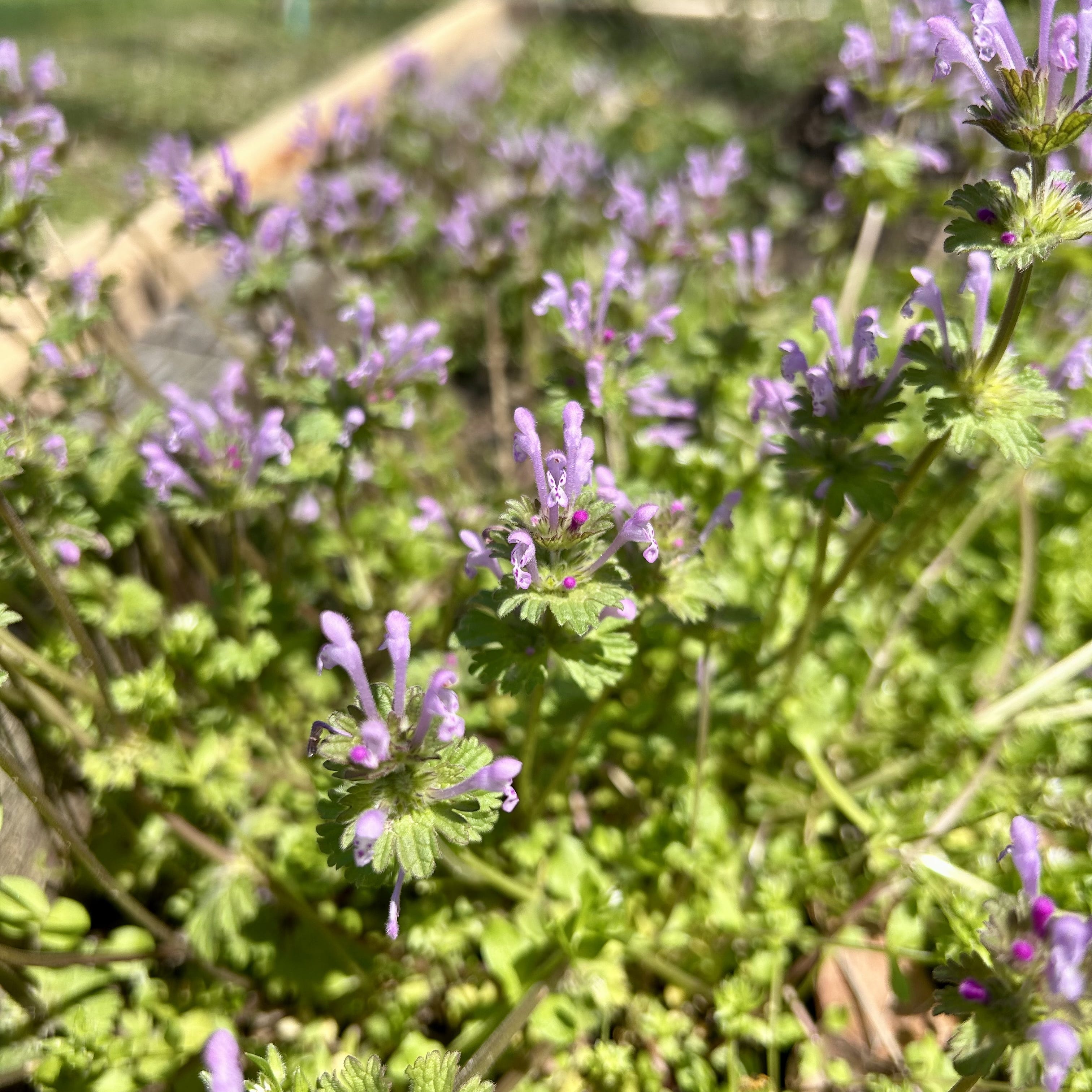
I love the fluted flowers of henbit, though I’ll admit I’m not a fan of how quickly these plants take over my vegetable beds (each plant can produce upwards of 200 seeds). Henbit is actually a member of the mint family, and while we may not be adding it to a mint julep anytime soon, it does provide nectar and pollen for honeybees and bumblebees.
Purple Deadnettle (Lamium purpureum)
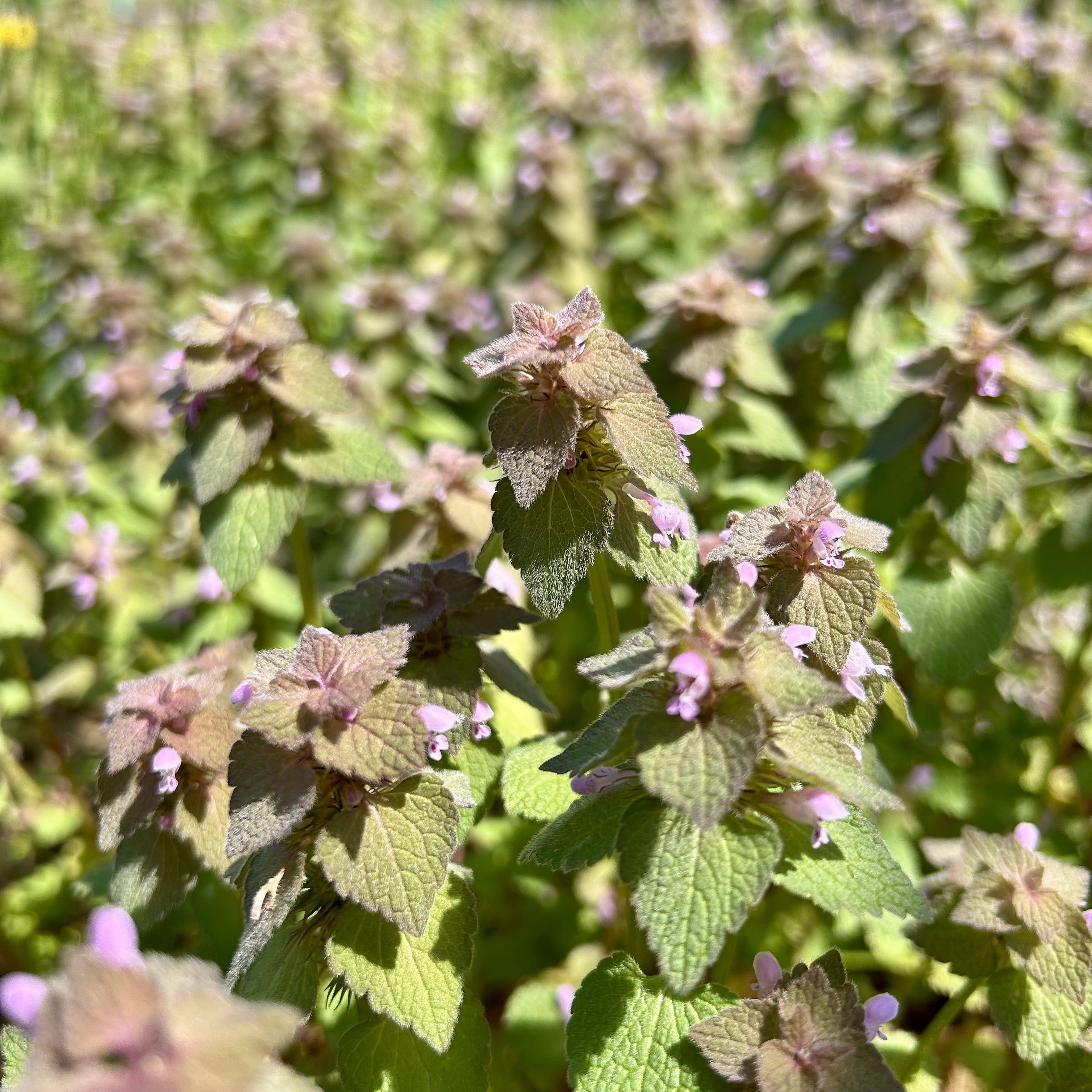
Henbit and purple deadnettle are commonly confused, though that’s not entirely our fault considering they’re cousins in the same plant family. Like henbit, pollinators rely on purple deadnettle in early spring when little else is blooming. Let both linger a little longer this spring before mowing your yard.
Garlic Mustard (Alliaria petiolata)
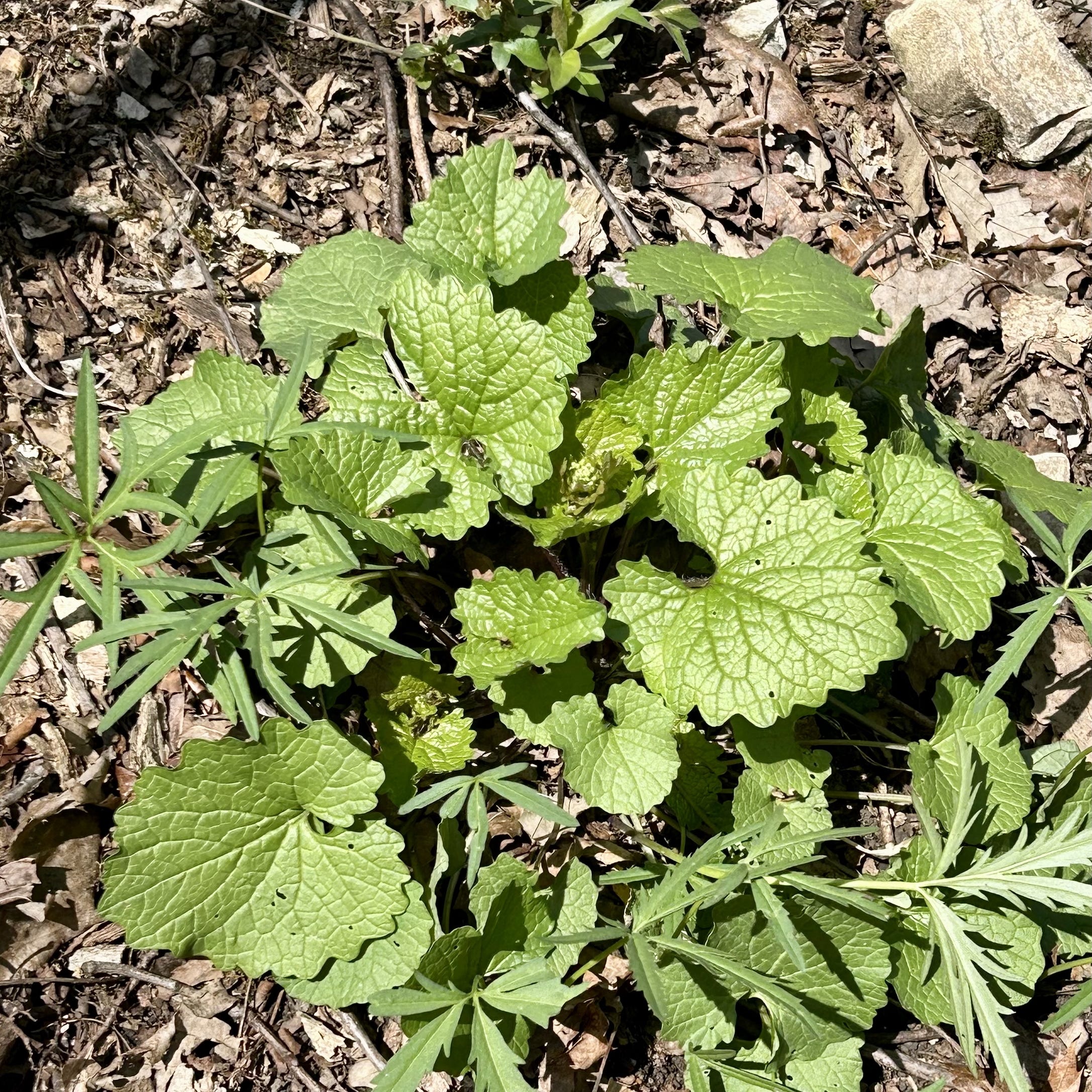
Garlic Mustard is an invasive herb brought to the U.S. in the 19th century for medicinal use. You can identify it by the heart-shaped leaves that give off a distinct garlic smell when crushed. While it is technically safe to eat young garlic mustard plants raw, older plants must be cooked because they contain cyanide. Even if you skip harvesting this one, The Nature Conservancy recommends pulling garlic mustard wherever you find it, since this species releases chemicals from its roots that stop trees and other species from growing.
Broadleaf Plantain (Plantago major)
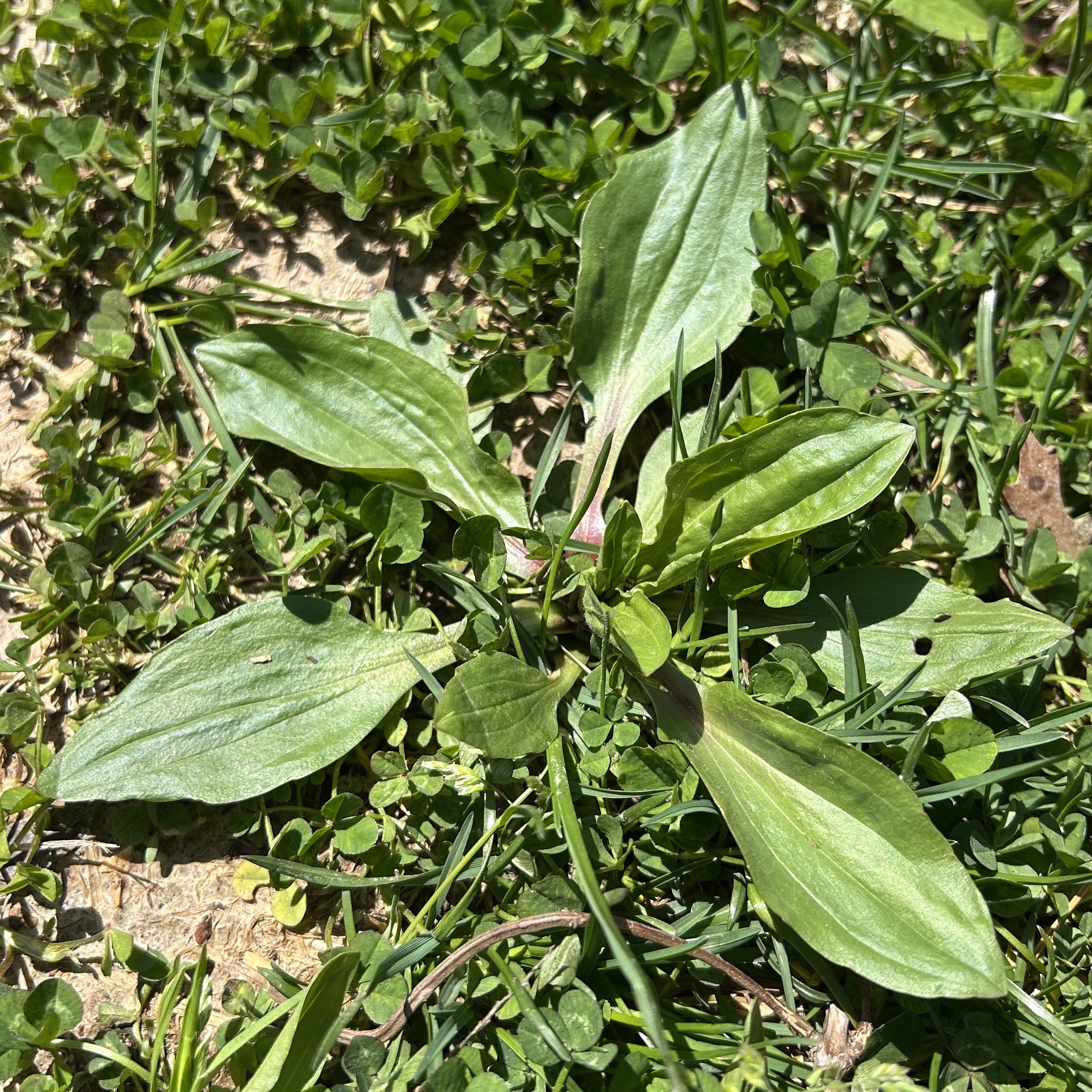
It’s not spinach, but it looks similar, doesn’t it? You can eat broadleaf plantains found in your yard in the exact same way so long as they haven’t been sprayed with pesticides. This large weed also can be used to quell itchy bug bites since the leaves contain anti-inflammatory compounds. Give it a try by rolling a leaf between your hands with a splash of water (or the less attractive but equally effective option of chewing it up in your mouth) until it becomes a goopy poultice, then apply to your bite. Alternatively: make this salve.
Chickweed (Stellaria media)
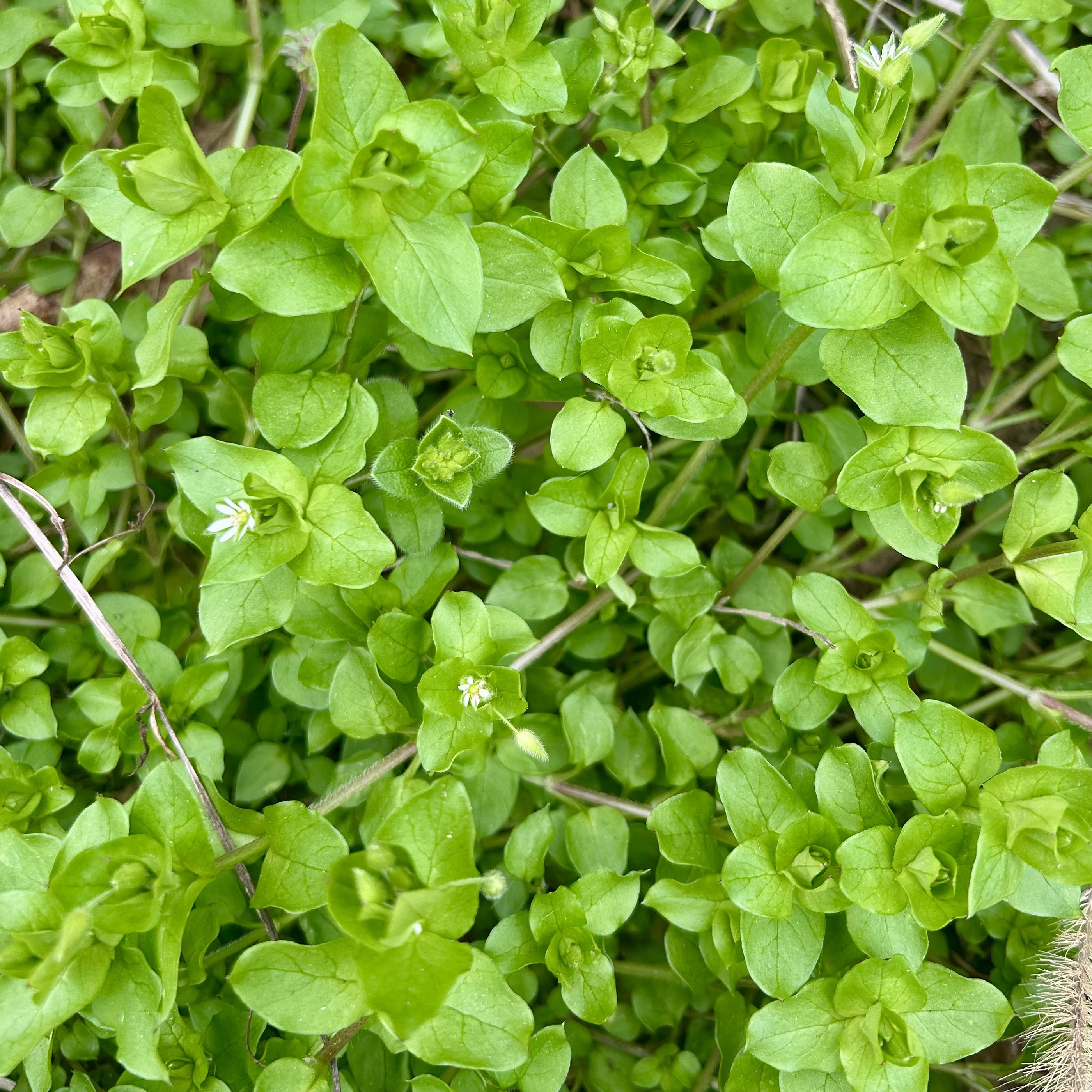
This weed is technically an herb related to carnations. It grows aggressively, spreading a foot wide per plant with small white blooms that later disperse anywhere from 500-3,000 seeds (which is why I can’t seem to get rid of it). However, chickweed has some perks: it’s leaves and flowers are edible, and it attracts pollinators such as bees, butterflies, and moths.
Dandelion (Taraxacum officinale)
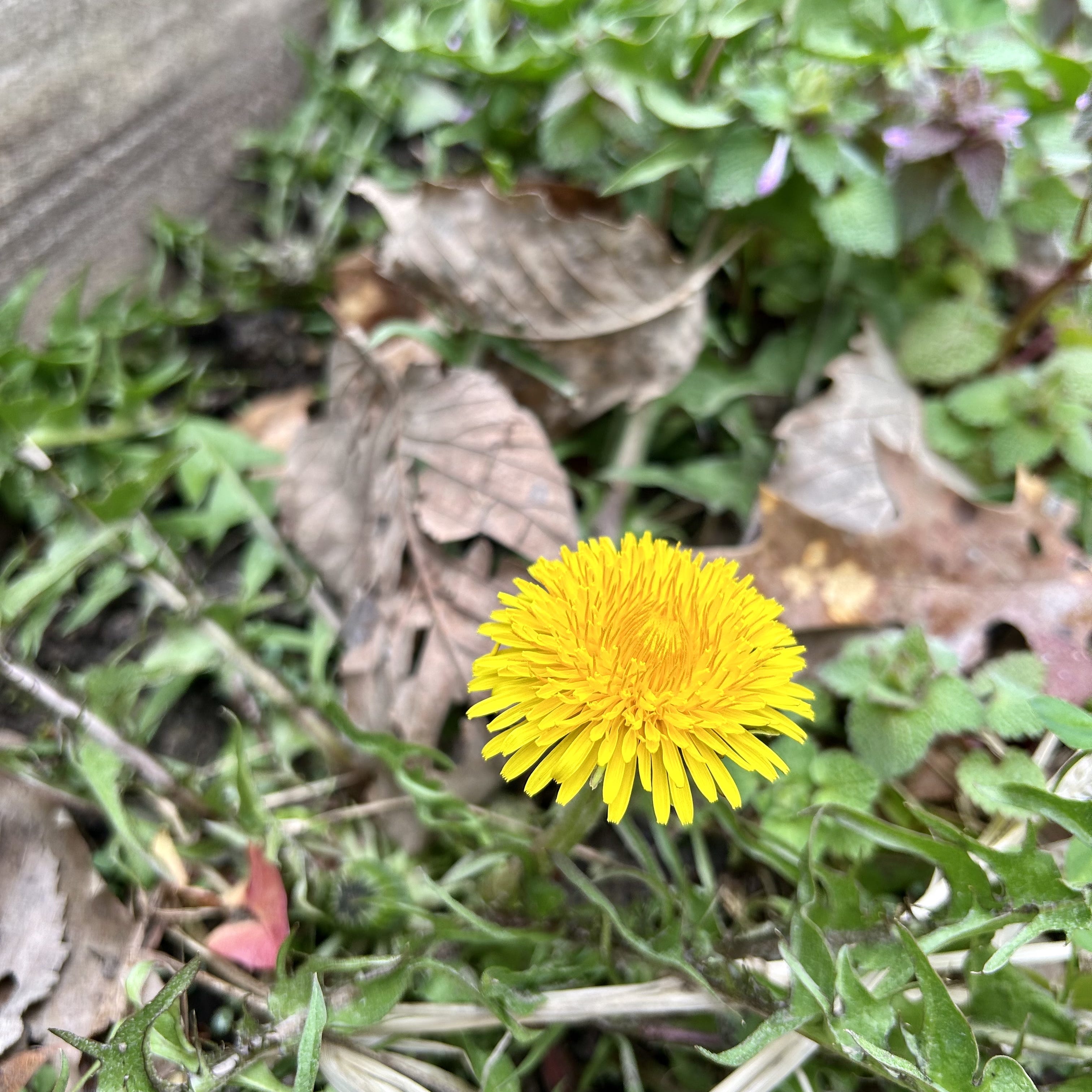
Easily recognizable for their buttery yellow cups, you may be wondering why I included dandelions on this list. They are, perhaps, the most obvious of weeds, though it’s only in the past century humans have decided dandelions have no value. These plants have been used for millennia as medicine, used to remedy everything from baldness to gallbladder issues and toothaches (though research is limited on efficacy). However, you really can eat dandelions — they’re packed with iron, potassium, calcium, and enough vitamin C to treat scurvy.
Let me know in the comments if you’ve ever foraged for some of these “yard weeds” and how you’ve used them. Or, share your favorite aggrieved weed and how you came to befriend it.
                      Art notes: This article's feature art includes an image from
        La plante et ses applications ornementales (1896) by Eugène Grasset.